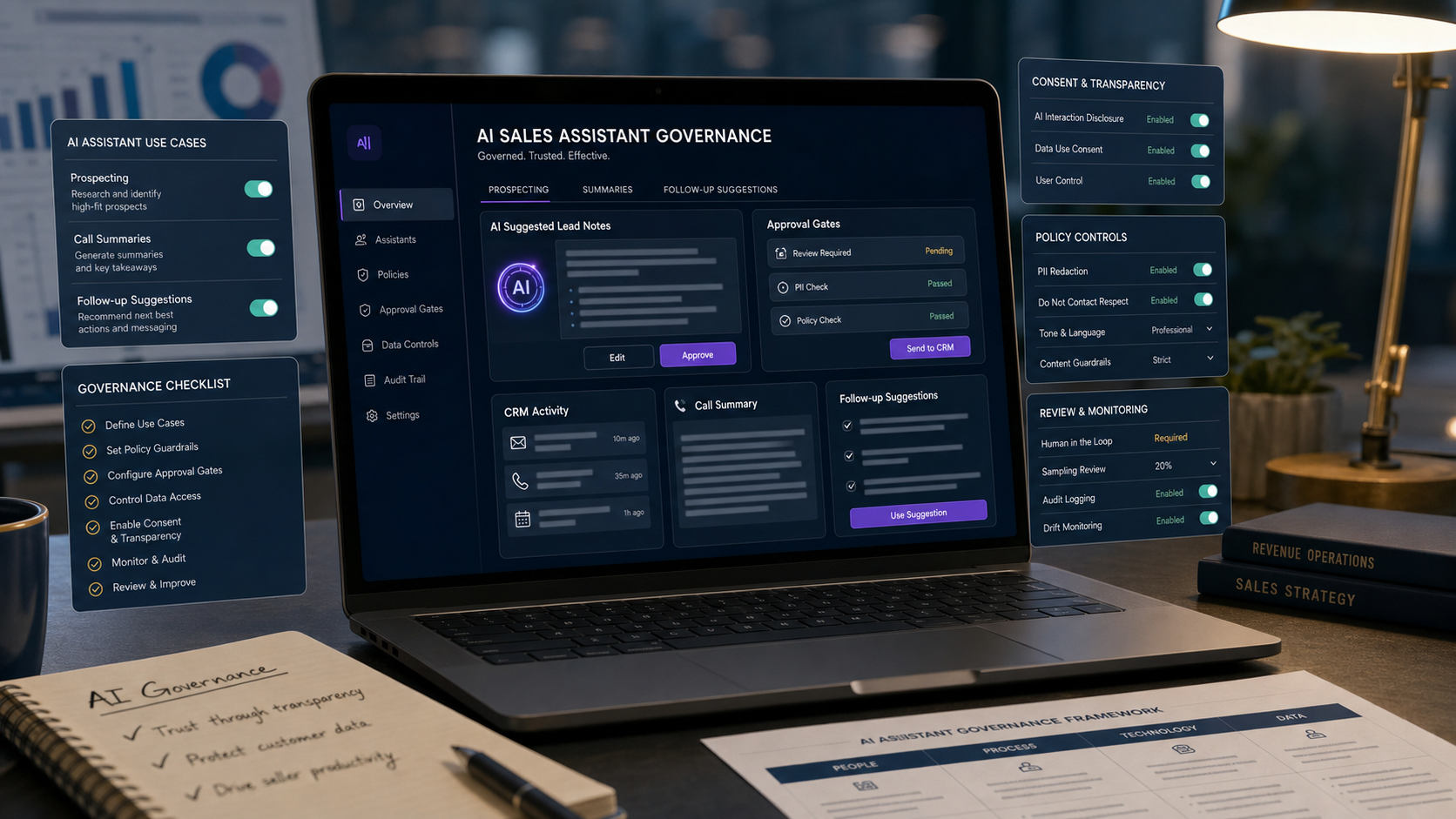
AI sales assistants can summarize calls, draft follow-ups, enrich prospect research, and update CRM fields. Those workflows touch customer data and buyer relationships, so governance should arrive before broad rollout.
The policy should define which AI outputs can be automated and which require human review.
WHY IT MATTERS
Good governance lets sales teams save time without creating inaccurate CRM history or careless outreach. It also helps managers understand whether AI support improves pipeline quality.
The most practical controls are use-case limits, review gates, data access rules, and sampling audits.
IMPLEMENTATION CHECKLIST
Treat the AI assistant as part of sales operations, not as a private productivity shortcut.
- Define approved use cases for prospecting, summaries, CRM updates, and follow-ups.
- Require human review before external messages or material CRM changes.
- Limit sensitive customer data exposure by role and account type.
- Sample summaries and recommendations for accuracy and tone.
- Track adoption, saved time, customer complaints, and pipeline quality.
RISKS AND TRADEOFFS
The main risk is automation drift. Suggestions can become de facto decisions if reps approve them without reading.
The tradeoff is speed. More review slows some workflows, but it protects customer trust and CRM integrity.
BOTTOM LINE
AI sales assistants are useful when they operate inside clear data, review, and accountability rules.