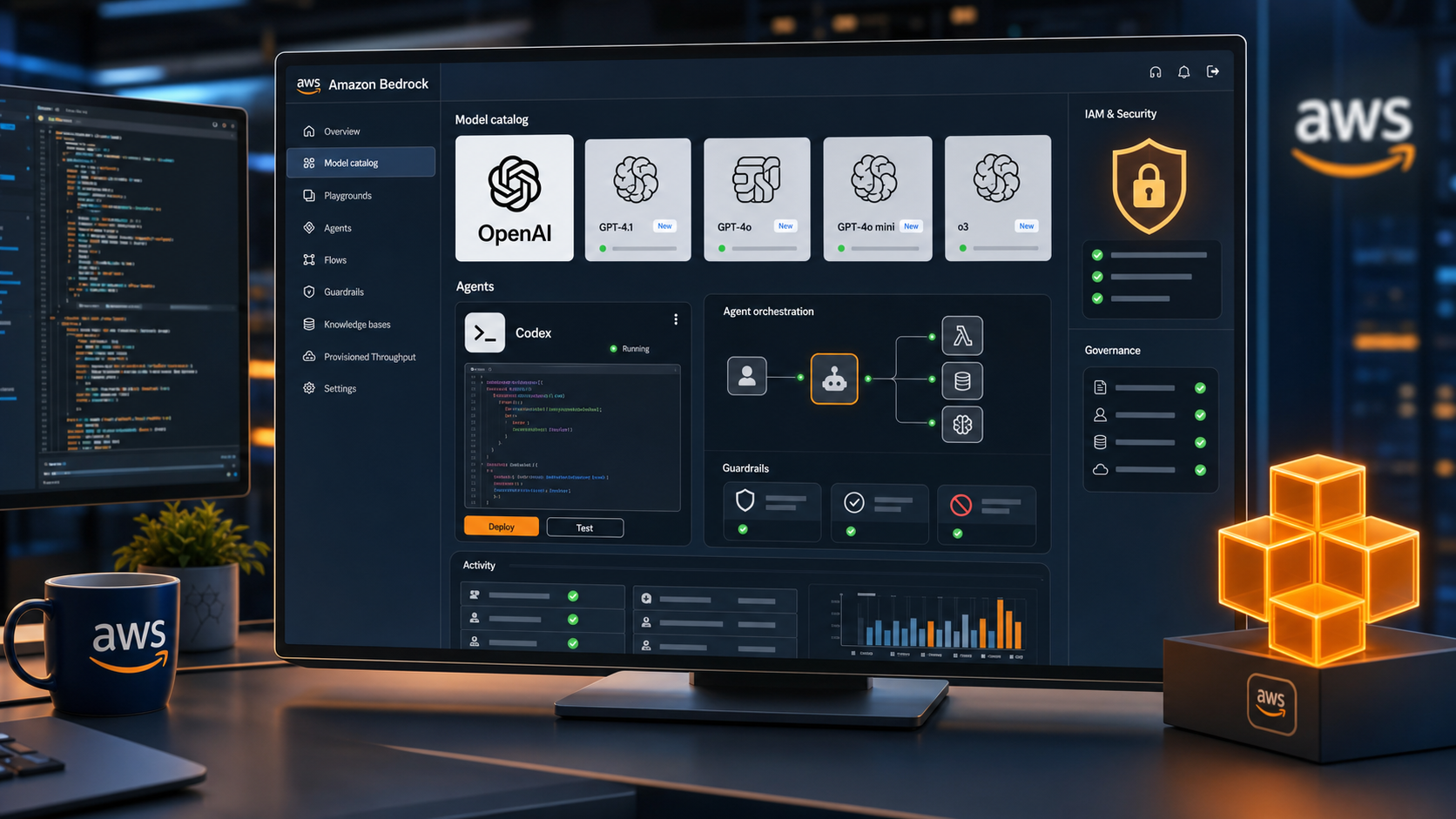
AWS announced limited preview access to OpenAI models on Amazon Bedrock, Codex on Bedrock, and Bedrock Managed Agents powered by OpenAI.
TechStaged reviewed the source material and built this article as original analysis for operators deciding whether the update belongs in their 2026 roadmap.
WHY IT MATTERS
For teams already operating on AWS, the appeal is unified identity, networking, logging, guardrails, and cloud commitments instead of managing a separate AI deployment surface.
For buyers, the evaluation should move beyond feature availability. The more important question is whether the update improves a real workflow without creating hidden administration, review, security, or support costs.
TEAM CHECKLIST
Before scaling the update, turn the announcement into an implementation checklist with clear owners.
- Choose one workflow where the feature can be tested with realistic data and user permissions.
- Define the success metric before rollout, such as conversion lift, cycle time, ticket resolution, code review speed, billing accuracy, or creative output volume.
- Review admin controls, audit logs, integration limits, pricing model, support paths, and failure handling.
- Document who can approve automated actions and who can pause the workflow if quality drops.
- Compare the new capability with existing tools so the team does not add another platform without retiring manual work.
RISKS AND TRADEOFFS
The risk is assuming Bedrock placement automatically solves agent safety. Teams still need prompt review, repository limits, secret protection, and human approval for production changes.
The best adoption pattern is usually a narrow pilot with clear review points. Broad enablement can come later when the team knows how the feature behaves under real workload pressure.
BOTTOM LINE
Use the preview to test whether Bedrock controls make Codex and OpenAI agents easier to govern inside existing cloud operations.