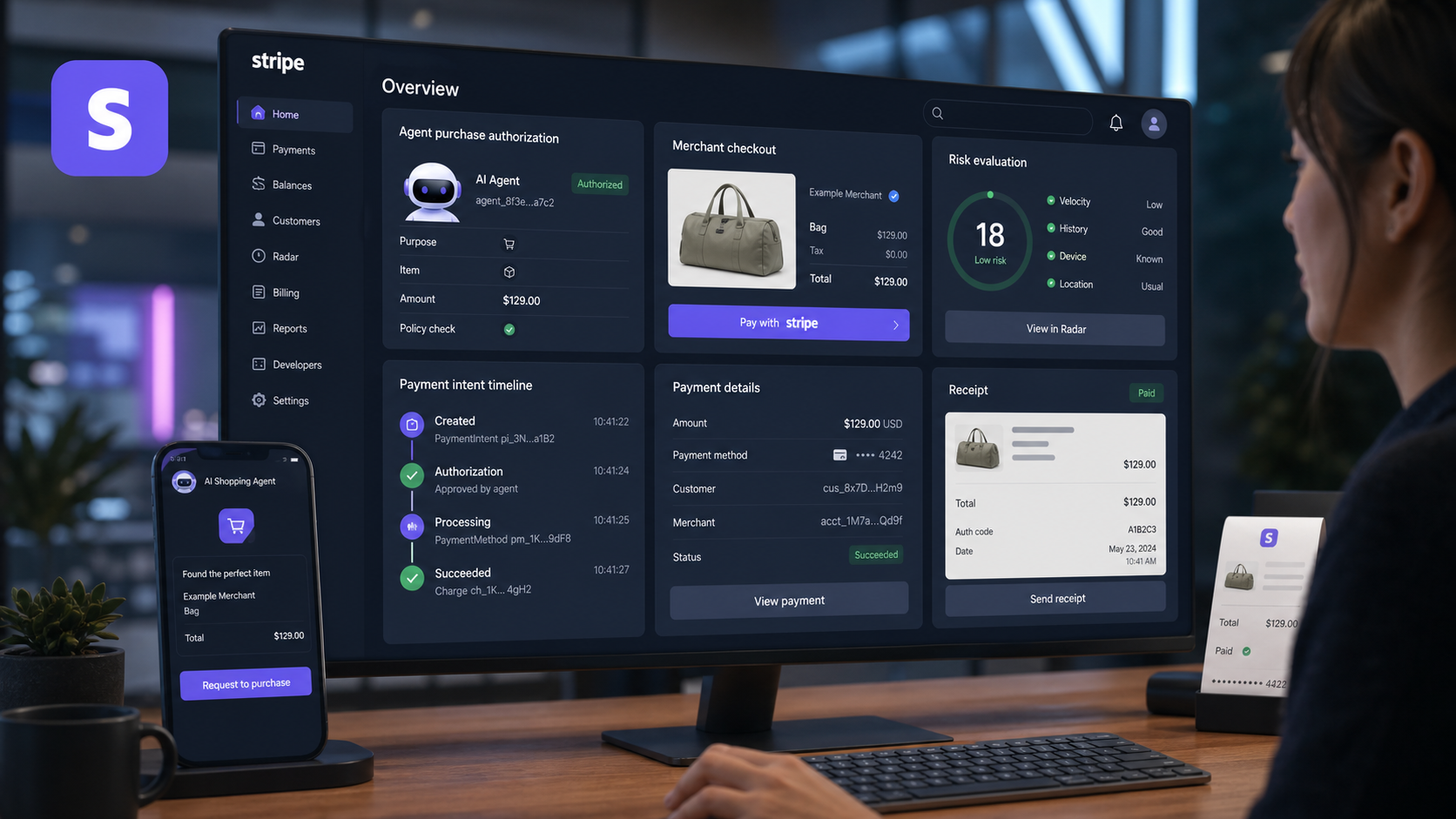
At Stripe Sessions, the company announced a partnership with Google to let businesses sell inside AI Mode and the Gemini app. Stripe also said its Agentic Commerce Suite would reach platforms such as Wix, BigCommerce, and WooCommerce so more merchants can participate without building each integration from scratch.
TechStaged reviewed the company announcement and relevant reporting, then built this article as original analysis for readers who need to understand the operational impact rather than repeat a launch checklist.
WHY IT MATTERS
The checkout button is no longer guaranteed to appear on a retailer’s own product page. If customers discover products through an assistant, payments must work across the assistant, merchant, platform, fraud, and fulfillment systems while keeping the user in control of the purchase.
The broader shift is that technology decisions now affect budgets, permissions, customer expectations, and team habits at the same time. A useful evaluation therefore considers the full workflow, not only the headline feature.
WHAT TEAMS SHOULD CHECK
Before adopting the update, convert the news into a small implementation brief with an owner, a test case, and a rollback plan.
- Decide what product and customer data an AI assistant can access before enabling agentic checkout.
- Require explicit approval for each payment or a clearly bounded recurring authorization.
- Use idempotency keys and order reconciliation for retries, partial failures, and delayed webhooks.
- Measure assistant discovery, checkout completion, refunds, and support contacts separately from direct traffic.
- Explain to customers where their payment details are stored and who handles post-purchase support.
RISKS AND TRADEOFFS
Agentic checkout increases the chance of accidental purchases, duplicate orders, and unclear responsibility when something goes wrong. The safest systems make the final item, price, seller, shipping date, and cancellation policy visible before authorization.
A narrow pilot is usually the fastest way to expose those tradeoffs. Start with a workflow where the data, approval path, and success metric are clear, then expand only after the team can explain both the gains and the failure modes.
BOTTOM LINE
Stripe’s Google partnership makes AI commerce more practical for existing merchants. Adoption should start with transparent, low-risk product flows and strong payment confirmation.