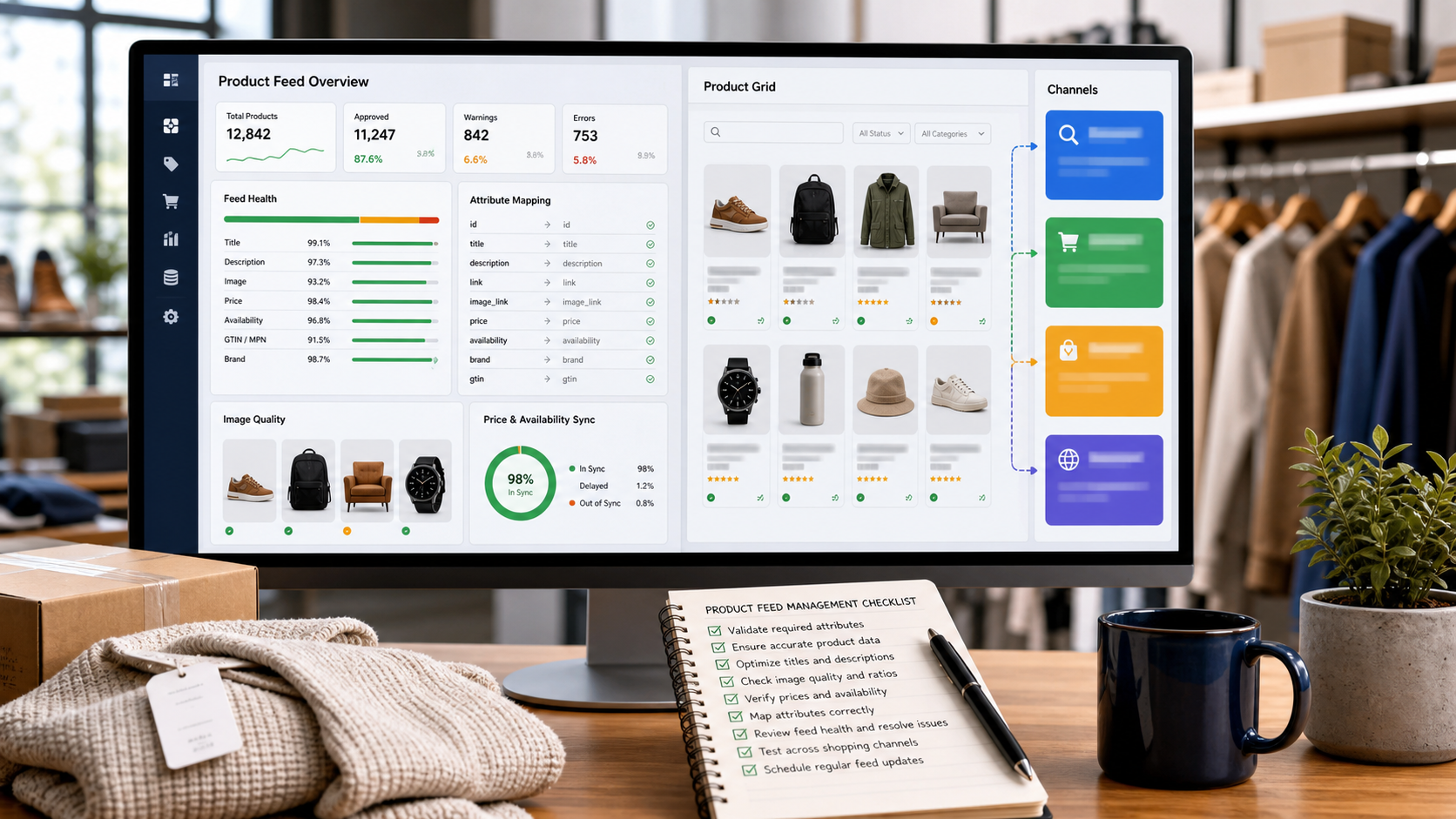
Product feeds carry catalog data into shopping, advertising, marketplace, and comparison channels. When fields are missing or stale, products may be disapproved, mispriced, or shown with weak merchandising context.
A good feed process connects ecommerce product data, inventory, image standards, pricing, promotion timing, and channel requirements.
WHY IT MATTERS
Strong product feed management improves discoverability and reduces wasted ad spend. It also gives merchandisers a clearer view of which catalog issues block growth.
The process is especially important when product variants, bundles, availability, or seasonal pricing change frequently.
IMPLEMENTATION CHECKLIST
Review feed health before adding more channels or campaign budget.
- Validate required identifiers, titles, descriptions, images, price, and availability.
- Map categories and custom labels to campaign and merchandising needs.
- Check image quality, variant data, sale prices, and landing page consistency.
- Monitor disapprovals, warnings, and delayed product updates.
- Document who owns catalog fixes in the ecommerce platform.
RISKS AND TRADEOFFS
The main risk is stale automation. A feed can keep syncing bad data if nobody reviews warnings and business rules.
The tradeoff is precision. More granular labels and variant rules create better control but require stronger catalog discipline.
BOTTOM LINE
Product feeds are merchandising infrastructure. Keep the required fields clean, monitor channel feedback, and assign owners for catalog fixes.