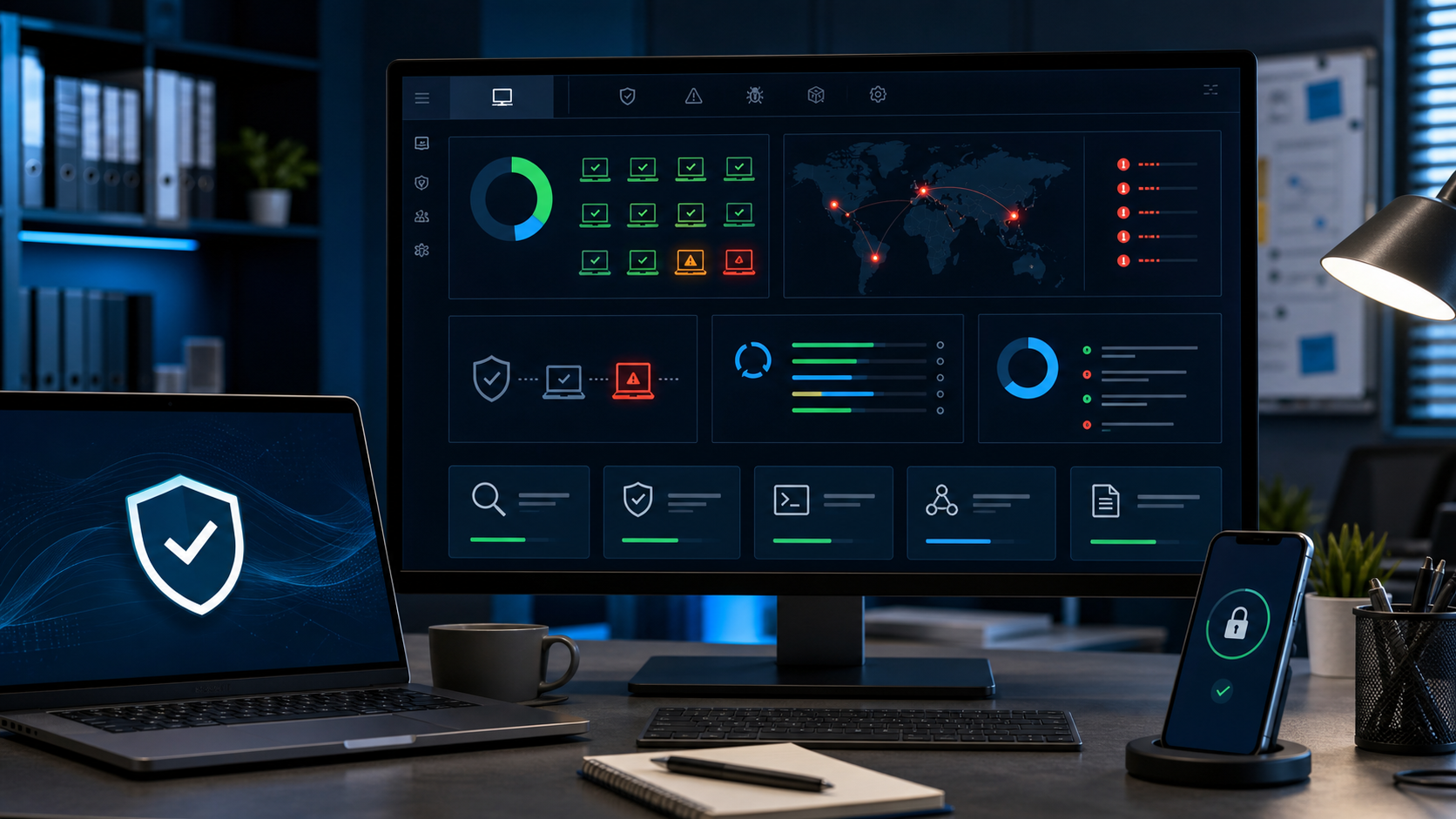
Small businesses depend on laptops, phones, and cloud apps, so endpoint security is often the front line. Endpoint detection tools can surface suspicious behavior, but teams need a plan for what to do with alerts.
The first step is device inventory and ownership. Unknown devices cannot be protected, patched, or isolated reliably.
WHY IT MATTERS
A good endpoint program reduces time between compromise and response. It also gives leaders a clearer picture of device health and risky gaps.
For small teams, simple response playbooks are more valuable than complex dashboards nobody reviews.
IMPLEMENTATION CHECKLIST
Prioritize coverage and response ownership before advanced tuning.
- Inventory company-owned and personally used business devices.
- Deploy endpoint protection to laptops, desktops, and supported servers.
- Define who reviews alerts and when incidents escalate.
- Test device isolation, malware removal, and account reset workflows.
- Monitor patch status, encryption, risky software, and inactive agents.
RISKS AND TRADEOFFS
The main risk is partial deployment. A dashboard can look healthy while unmanaged devices remain exposed.
The tradeoff is noise. More detection can create more alerts, so small teams need tuning and clear severity rules.
BOTTOM LINE
Endpoint detection works when device coverage, alert ownership, and response playbooks are clear before an alert arrives.