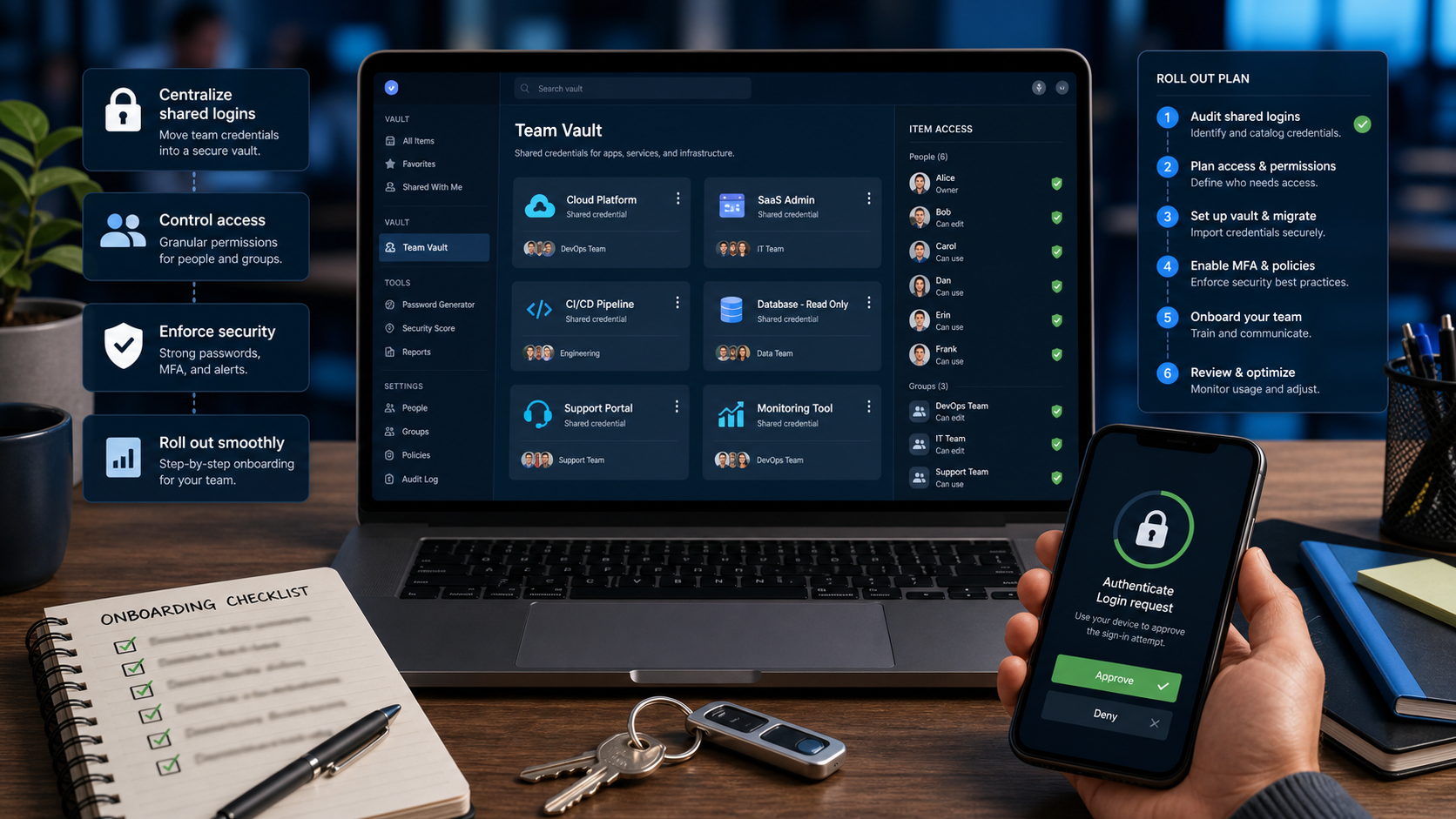
Phishing-resistant MFA reduces reliance on codes that attackers can trick users into sharing. For many teams, the rollout includes passkeys, platform authenticators, or hardware security keys.
The project should prioritize admin accounts, email, domain registration, finance tools, cloud infrastructure, and identity provider access.
WHY IT MATTERS
Stronger authentication can reduce account takeover risk, especially for users with broad permissions.
The business impact depends on rollout quality. Poor recovery planning can lock out users or push teams back to weaker fallback methods.
IMPLEMENTATION CHECKLIST
Roll out stronger MFA in phases so high-risk accounts are protected first.
- Inventory critical accounts and identify privileged users.
- Choose supported phishing-resistant methods for each platform.
- Enroll administrators before broad user rollout.
- Define recovery, lost-device, offboarding, and emergency access procedures.
- Monitor adoption and disable weaker methods where feasible.
RISKS AND TRADEOFFS
The main risk is leaving fallback channels weaker than the primary method. Attackers often target recovery paths.
The tradeoff is usability. Stronger authentication can add setup friction, so rollout support and clear recovery rules matter.
BOTTOM LINE
Phishing-resistant MFA should protect the accounts that can hurt the business most, with recovery paths that are just as carefully designed.